Three Ways to Set a Flagpole: In-Ground Flagpole Installation and Two Alternatives
Every flagpole project turns on one early decision that is expensive to reverse later: how the pole meets the ground. In-ground flagpole installation sets a ground socket and a concrete footing below the surface, so the pole becomes part of the site. A surface mount flagpole system instead bolts a base plate or flange to a surface that already exists. Portable bases — cross, water bag and ground spike — keep a pole standing with no permanent work at all. The three routes carry different prerequisites, different costs of change and different maintenance routines.
This guide compares the three forms for buyers and project teams who must lock the mounting method before they order. For the wider hardware range, start from our flagpole and base product range; for completed work, see the project case studies.
In-Ground Flagpole Installation: Ground Socket, Concrete Footing and Drainage
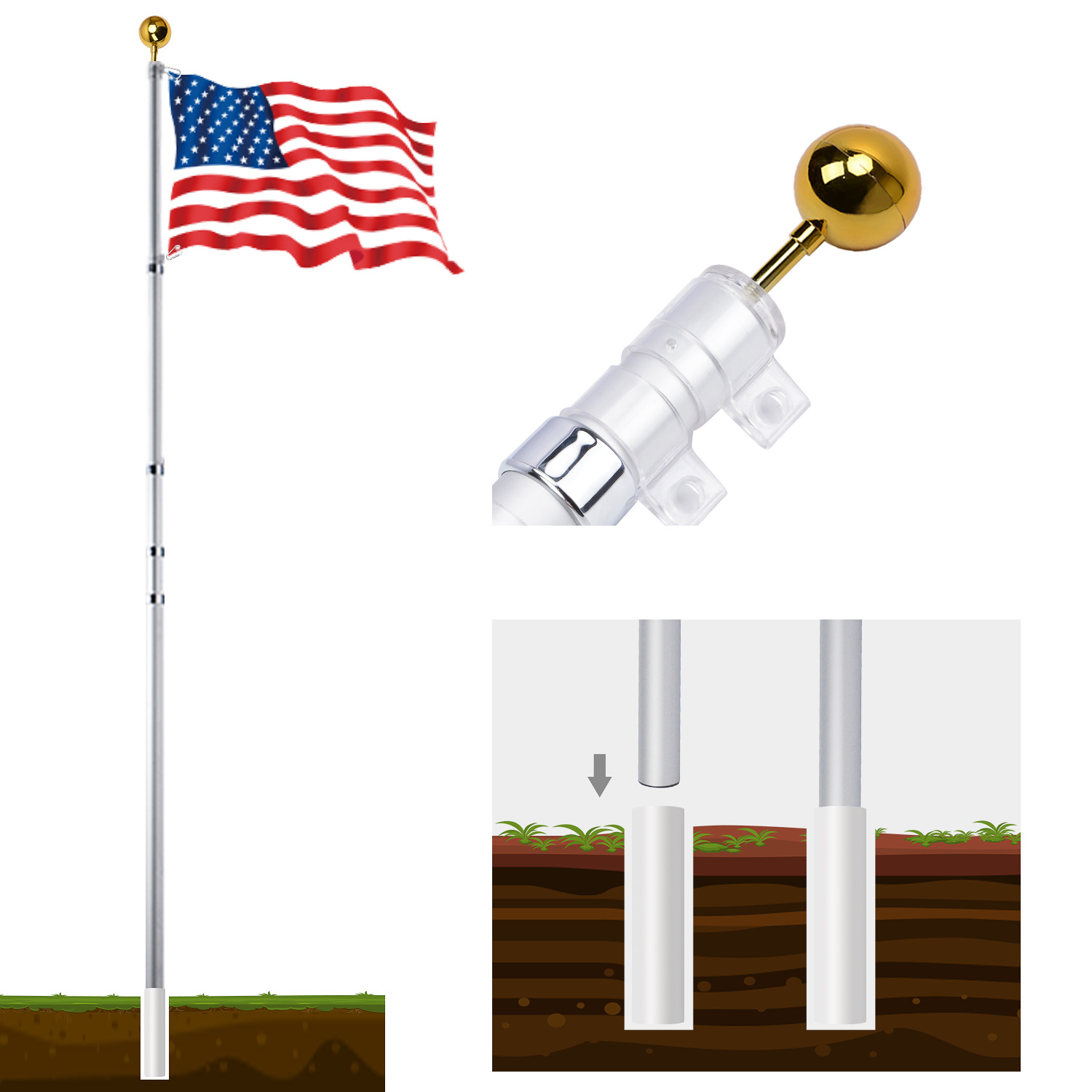
In-ground is the default for anything that has to stay up for years: a campus flagpole, a plaza pole, a factory entrance. A ground socket, also called a ground sleeve, is embedded in a poured concrete footing, and the pole slides into that socket rather than being fixed to a visible plate. Larger commercial installations often use a pre-embedded base plate instead: a steel plate cast into the footing, with the pole bolted down onto it. Poles supplied for this arrangement are normally stainless steel and typically 12 m and above. The footing is permanent, while the pole itself can still be lifted out for service.
What the site has to provide:
- A poured concrete footing. The socket is set in concrete and held plumb while it cures, so the ground work happens before the pole arrives. The pole cannot go up the same day the hole is dug.
- Drainage. A socket is an open tube in the ground, and water that collects inside it has to be able to leave. Decide how it drains before you pour.
- Utility checks. You are excavating, so locate cables, irrigation lines and drains on the plan and on the ground first.
- A fixed position. Once the footing cures, that spot is permanent; relocating the pole means demolishing concrete.
In return, an in-ground pole needs no surface weight, leaves nothing above ground to trip over, and holds tall, multi-section commercial shafts that no portable base could carry. Stainless 304 or 316 suits exposed coastal sites; aluminium or steel suits lighter budgets.
Surface Mount Flagpole: Base Plate, Anchors and Counterweights
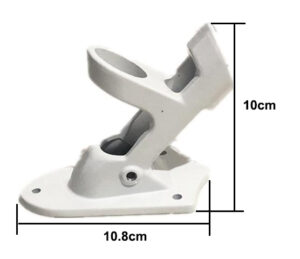
A surface mount flagpole replaces the buried socket with a base plate — a steel flange or an iron plate with a socket tube welded to it. Fasten the plate down and the pole stands on top of it. The same plate can be fixed in two ways:
- Anchored. Bolt the plate through a concrete slab, roof deck or steel structure. The structure carries the load, and the fix is reversible with hand tools and a patch of filler.
- Ballasted. Leave the plate free-standing and add weight to it. Some plates are weighted by design and some accept extra ballast on top. This is the version that lets a business move a pole without touching the ground.
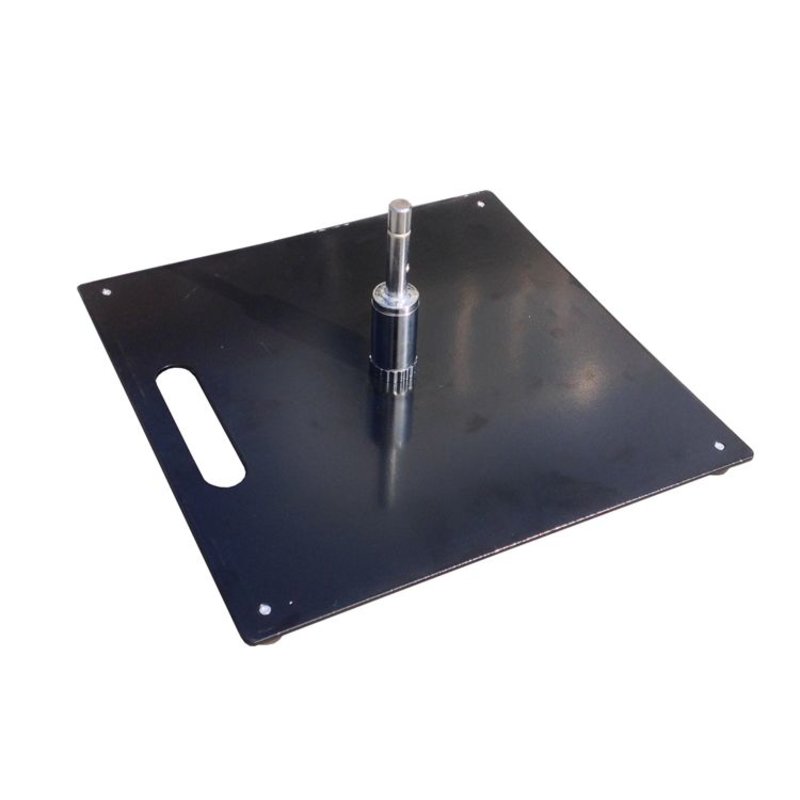
Surface mounting is the right answer whenever the ground is not yours to break: leased premises, finished paving, a rooftop, a trade show hall. Two prerequisites decide whether a base plate works. The slab has to be sound enough to accept anchors without cracking, and the plate has to sit flat — a plate on uneven ground rocks, and a rocking pole loosens its fasteners over time. Because the plate stays visible, finish is part of the specification: powder-coated steel for colour matching, anodised aluminium or stainless trim for architectural projects.
Portable Bases: Cross Base, Water Bag and Ground Spike
When the pole has to come down at the end of the day, or the site changes week to week, use a portable base. Three families cover most cases:
- Cross base or iron plate base. A flat steel plate with a socket tube and often a carry handle. Stability comes from plate weight plus ballast added on site. Best on hard, level surfaces.
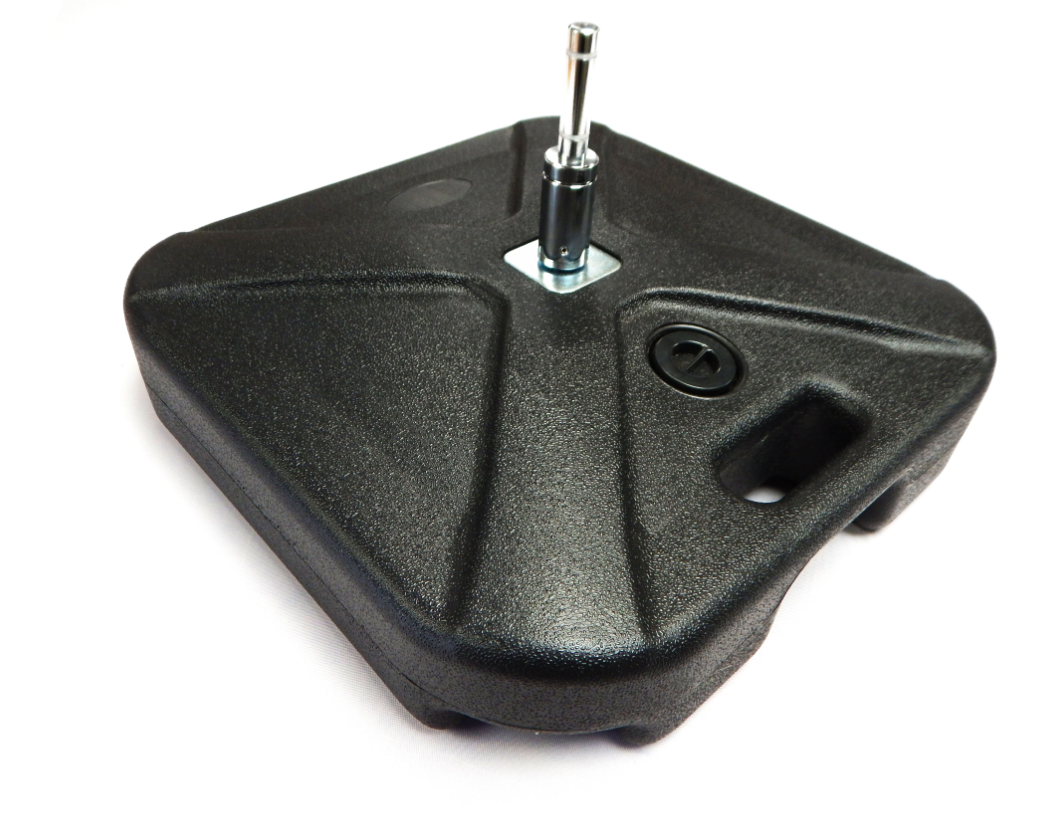
- Water bag or water tank base. A tank filled on site. Empty it ships compact and light; filled it holds a banner, feather flag or advertising flag in place.
- Ground spike. A chrome or stainless stake driven into soil with a socket on top for the pole. Fast and tool-free, ideal for lawns and verges — but it holds only as well as the soil allows and is not for hard surfaces.
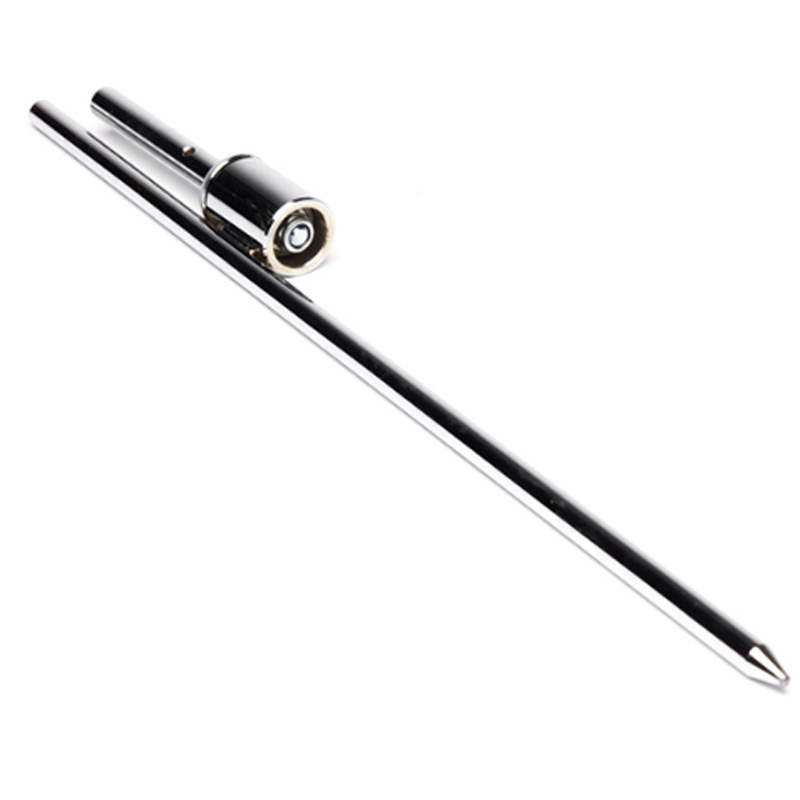
Base and spike options are supplied in weight steps from roughly 1 kg to 12 kg, so one pole family can ship with a light unit for short indoor poles and a heavy unit for full-size outdoor displays. Portable bases trade permanence for flexibility: easiest to relocate, least resistant to a determined push, which is why they belong with short and medium poles rather than tall commercial masts.
Form, Prerequisites and Relocatability at a Glance
| Form | Prerequisites | Relocatability | Maintenance focus |
|---|---|---|---|
| In-ground ground socket | Concrete footing, drainage path, utility locate, cured before install | Permanent — moving it means demolition | Clear the socket, check for standing water, inspect the pole base |
| Base plate, anchored | Level, sound slab or deck that can take anchors | Reversible with tools, but not a daily task | Re-torque anchors, confirm the plate sits flat |
| Base plate, ballasted | Flat hard surface plus ballast available on site | Moveable with lifting equipment or two people | Dry or replace ballast, inspect plate edges and finish |
| Cross / iron plate base | Level hard surface, manageable lifting weight | Fully portable | Touch up the finish, check the socket tube weld |
| Water bag / tank base | Water supply on site, level ground | Fully portable when empty | Drain before storage, inspect seams and valves |
| Ground spike | Soft soil free of buried services | Pull out and reuse elsewhere | Clean and dry the spike, check for bending |
Pre-Installation Site Check Before You Order
Walk the site and answer these before committing to a form:
- Surface. Soil, grass, gravel, concrete, tile or decking? Hard surfaces point to a plate or a portable base; soil points to a socket or a spike.
- Permission. If you cannot excavate or drill, in-ground footing is off the table from the start.
- Buried services. Any cables, pipes or irrigation in the intended spot? This applies to spikes as well as footings.
- Drainage. Where does water sit after rain? A hollow that holds water is the wrong place for a socket.
- Level and fall. Plates, cross bases and water bag bases all need a level surface, so measure any slope rather than guessing.
- Clearance. How much space does the flag need to swing, and what is overhead — tree canopy, cables, roof overhang?
- Service life. Months or decades? Events favour portable; a permanent frontage favours in-ground.
- Handling access. Can the base reach the spot, and can your team lift the base you selected?
Writing those answers down before ordering prevents the most expensive mistake in this category: buying a pole whose base cannot actually be installed where the flag has to fly.
Maintenance by Base Type
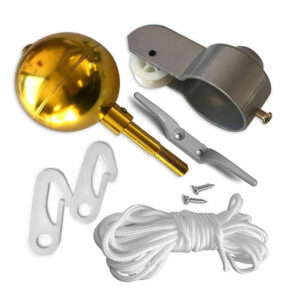
All three forms need less attention than buyers expect, but different attention. In-ground sockets should be inspected after heavy weather and cleared of debris and standing water; the footing below rarely needs work. Anchored plates should be checked for loose fasteners and for lift between plate and slab. Ballasted and portable bases should be dried, drained and stored under cover, with the finish touched up so powder coating or anodising keeps protecting the metal. Ground spikes should be cleaned and checked for bends before the next campaign. In every case the base has to match the pole and the flag area — a heavier base does not rescue a pole that is too flexible for its display. Spare rings, halyards and socket tubes live in our flagpole accessories range.
Next Step: Get a Quote
Tell us the surface, the pole height and the flag size, and we will confirm which of the three forms fits and quote the matching socket, base plate or portable base, with minimums, tooling and lead time where new hardware is involved — custom parts start at around 500 pieces. Stock items are dispatched in 3–7 days, and pre-embedded or large commercial poles follow the production schedule confirmed with the quotation. Send your site notes and specification to our team and request a quote within 24 hours. If you are still comparing shafts, browse the outdoor flag pole range first.