Choosing a Custom Flag Printing Method
Custom flag printing comes down to three production routes — dye sublimation, screen printing, and embroidery — and each behaves differently once a flag is actually flying. The right route depends on how many colours your artwork uses, how fine the detail is, whether the reverse side will be seen, how long the flag stays outdoors, and how many pieces you need. Put those five questions in order and the specification usually writes itself.
DISITU makes flags and banners for buyers in about 90 countries, and the pattern repeats: the artwork decides the method, the environment decides the fabric, and the order size decides where a method stops being economical. This guide works through both layers — method first, then the fabric and weight that carry it — so you can brief a supplier with a spec instead of a guess.
If you know the look you want but not the process, browse our flag and banner range before asking for samples.
Dye Sublimation Flags for Full-Colour Artwork
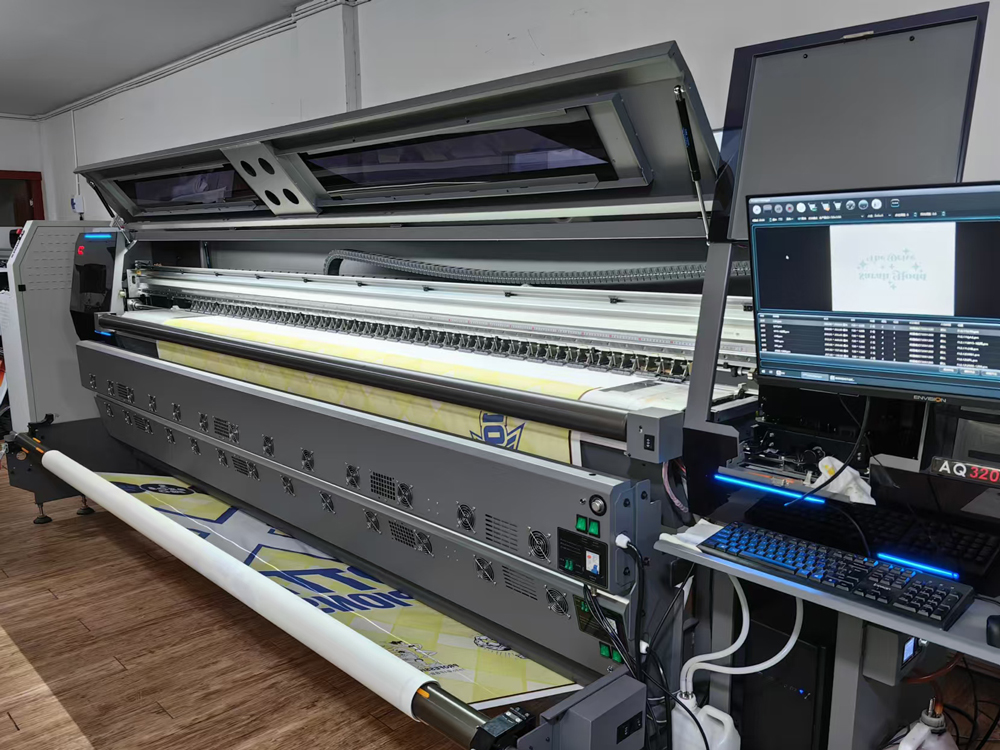
Dye sublimation prints the design onto transfer paper, then heat and pressure drive the ink into the polyester fibre instead of leaving it sitting on the surface. The graphic has no film to crack or peel, and photographic gradients, skin tones, and soft shading reproduce cleanly. Because the ink becomes part of the cloth, there are no plate charges and no colour-count penalty: a twelve-colour crest costs no more to set up than a two-colour logo.
That makes sublimation the default for complex logos, full-colour artwork, photographs, and national flags. It is also the most practical route for short runs and one-off designs: buyers testing a campaign or producing a limited event flag get full-colour quality from the first piece, with no minimum that forces over-ordering.
Screen Printed Flags for Large Runs With Few Colours
Screen printing pushes heavier ink through a mesh screen, one screen per colour. On plain, high-contrast artwork — a two- or three-colour logo, a bold wordmark, a simple emblem — the ink sits thicker on the cloth and reads strongly at distance. That opacity is an advantage on dark or medium-tone fabrics, where a sublimated print has to work harder to hold saturation.
The trade-off is flexibility. Every colour needs its own screen, so setup effort grows with the colour count, and fine detail or photographic shading is out of reach. Screen printing rewards simple, high-contrast artwork ordered in volume; it punishes intricate designs and one-off runs. It suits pennants, bunting, and event flags, where bold colour blocks meet a long print run. For colour-critical work, always approve the ink on your actual fabric in a production sample rather than on screen.
Embroidered Flags: Texture, Prestige, and Where Detail Stops
Embroidery stitches the design into the fabric with thread, giving a raised, tactile surface that photographs well and carries a ceremonial, institutional weight no flat print matches. That is why embroidered crests, club emblems, and indoor display flags so often use it. Embroidery also resists abrasion well, because the design is thread rather than ink.
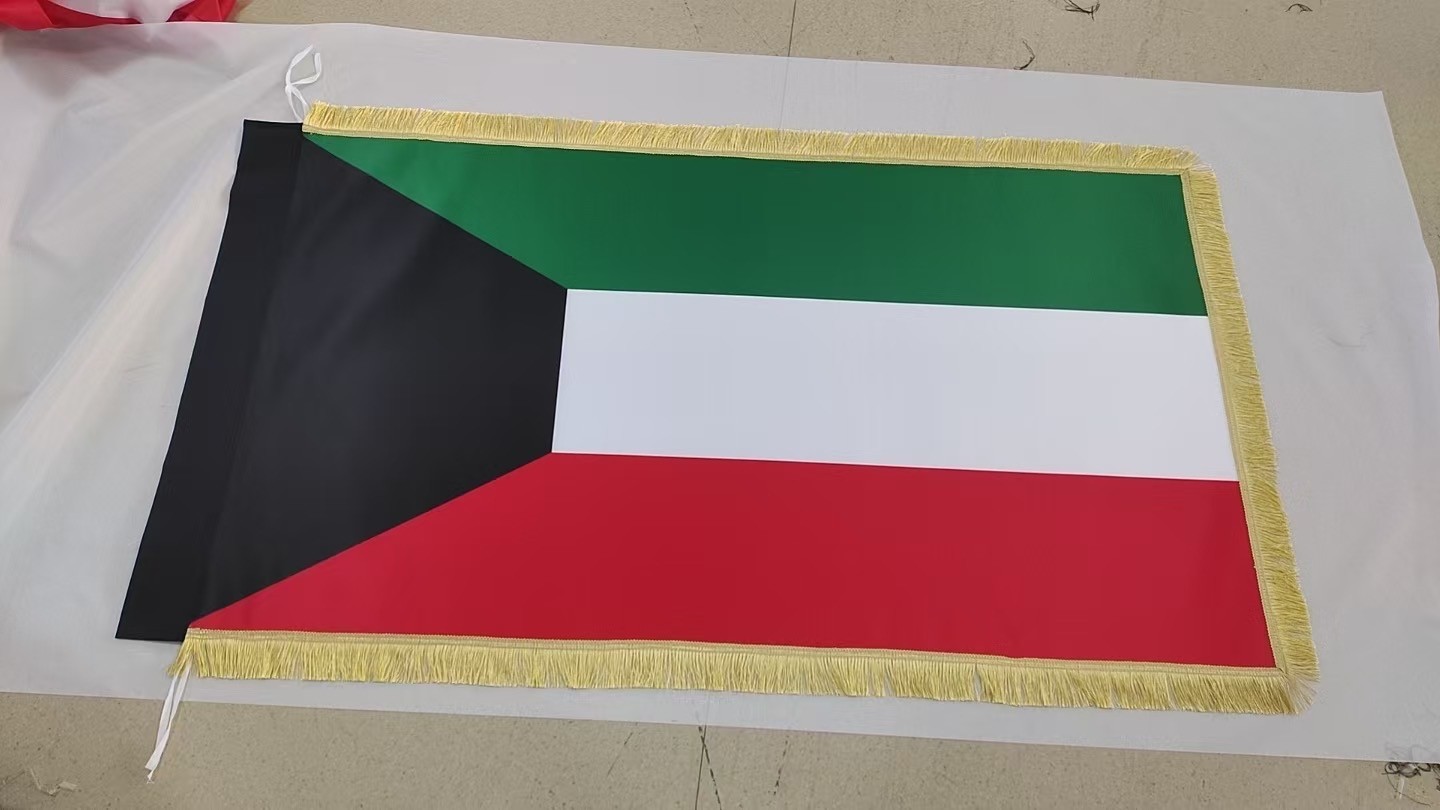
The constraint is resolution. Fine text, small type, tight curves, and photographic detail do not translate: stitching has a minimum stroke width and a minimum letter height before a shape closes up. Embroidery is therefore reserved for badges, crests, and low-colour marks, and it is often combined with printing — stitch the crest, print the background. A fringed, embroidered ceremonial flag belongs in this category and is finished as a display piece rather than an outdoor flyer.
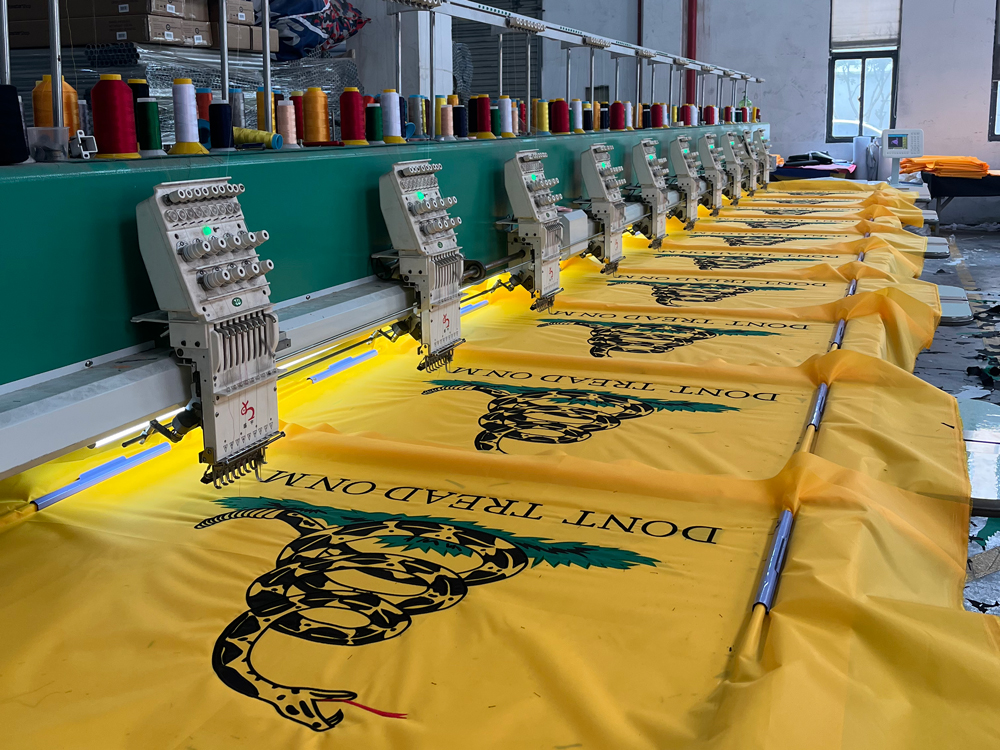
Single-Sided vs Double-Sided: Light, Show-Through, and the Reverse Side
Method and face count are separate decisions, and treating them as one risks a flag that looks wrong from the wrong side. A single-sided print reads correctly from the front; from behind you see the design reversed, and depending on fabric weight you also see the print showing through.
Lighter fabrics show through more. A heavier weave blocks more of the print but adds mass and wind load, so the densest cloth is not automatically the right answer for a flag that has to fly. Where both faces must read correctly — a flag on a pole viewed from both sides, a banner in a courtyard — double-sided printing uses two printed layers with a light-blocking liner between them. That adds material, weight, and labour, so it belongs where two-sided readability is genuinely required, not as a default upgrade.
Matching Print Method to Fabric and Weight
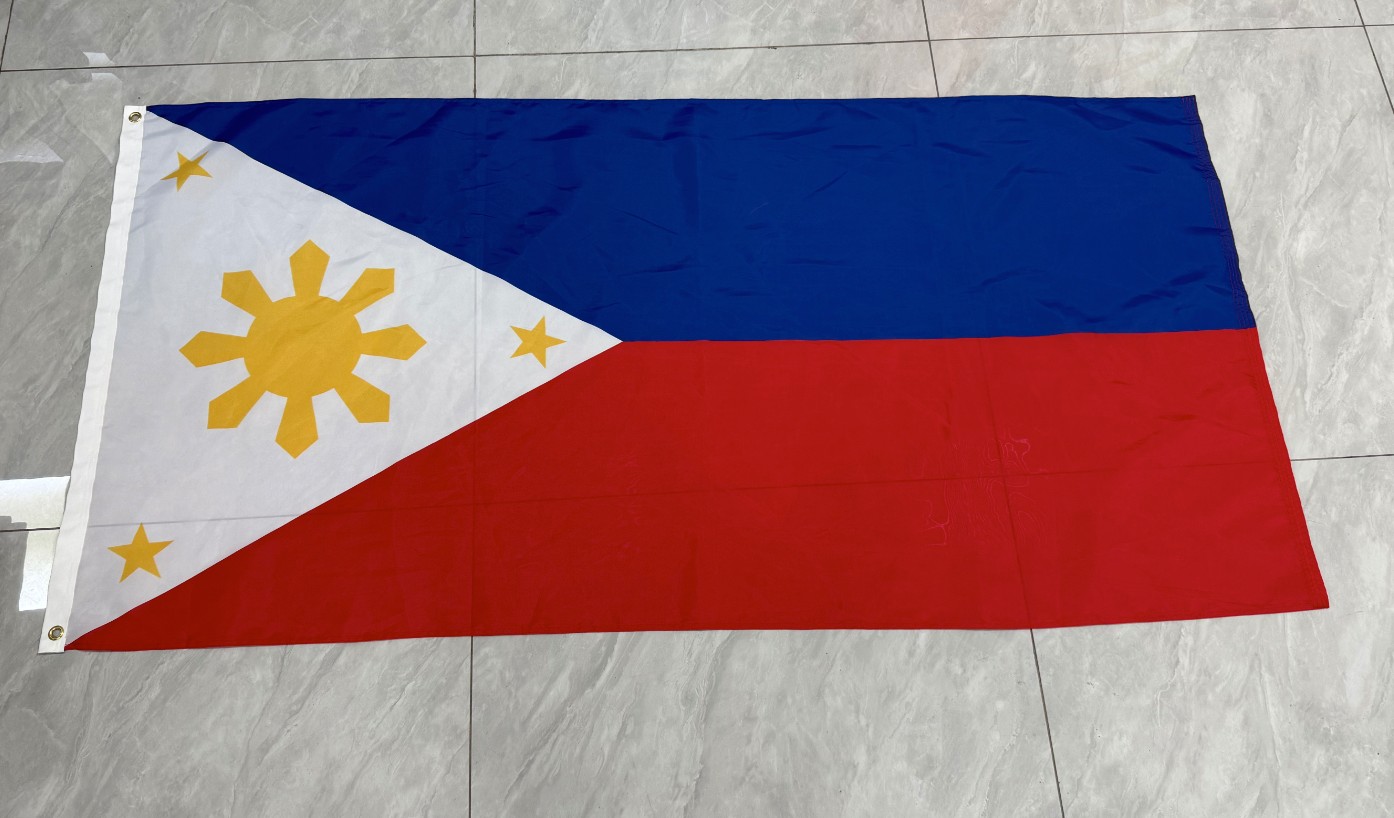
The second layer of the decision is the substrate. DISITU works with polyester, nylon, oxford cloth, satin, and mesh, and fabric weights run from lightweight polyester around 110 g/m² up to 600D oxford cloth. Each fabric changes how ink behaves, how the flag moves, and how long it lasts in the open.
| Method | Best for | Colours | Fine detail | Reverse side | Typical run |
|---|---|---|---|---|---|
| Dye sublimation | Full-colour logos, photos, flags | Unlimited, no setup penalty | Excellent | Shows through on light cloth | One piece and up |
| Screen printing | Bold low-colour artwork | One screen per colour | Limited | Heavier ink, strong read | Large runs |
| Embroidery | Crests, emblems, ceremonial flags | Thread colours | Minimum stroke and letter height | Thread visible on reverse | Premium, smaller counts |
Weight drives fly-ability and show-through; fabric family drives ink behaviour and finish.
| Fabric | Weight band | Print method fit | Where it belongs |
|---|---|---|---|
| Polyester | Light, from around 110 g/m² | Dye sublimation | Full-colour flags, fast flying |
| Nylon | Light to mid | Dye sublimation, screen printing | Outdoor flags, wet weather |
| Oxford cloth | Heavy, up to 600D | Screen printing, embroidery backing | Flags that must take abuse and block light |
| Satin | Mid | Embroidery, printed ceremonial flags | Indoor display, sheen and trim |
| Mesh | Open weave | Dye sublimation, screen printing | Large flags in strong wind, low pole load |
If your project mixes flag types across a single event, it is worth reading the range together on our products pages before choosing a single method across the whole order.
Weathering, Finishing, and Reinforcement
Outdoor flags fail at the edges first. UV fades the ink over time, but wind and flogging destroy the hems, the fly end, and the grommet corners long before the print gives out. Finishing is therefore part of the durability spec, not a cosmetic afterthought. Standard reinforcement includes lock-stitched edges, a reinforced fly end, a flag sleeve or header for hoisting, and grommets at the heading; heavier outdoor flags add extra stitching at the corner stress points.
Sublimated and screen printed flags on outdoor polyester and nylon handle sun and rain when the fabric and finishing are right. Satin suits display and ceremonial use, where sheen and a finished trim matter more than wind resistance. Mesh lets air pass through, keeping large flags flying in strong air and reducing load on the mast — useful for oversized flags on tall outdoor flag poles.
Small Batches vs Large Orders: What Changes
Method choice shifts with quantity. For trials and short runs, dye sublimation wins because there is no setup barrier and full colour is available from the first piece. As volume rises and the artwork stays simple, screen printing becomes the efficient route: the per-piece cost of ink and printing falls while the setup is spread across the run. Embroidery sits outside that curve — it is a premium detail rather than a volume method, usually applied to fewer pieces or combined with printing.
Order structure follows the same logic. DISITU ships stock flags from a single piece with no minimum on most lines, and artwork-only customisation — printing your design onto an existing flag specification — carries no minimum either. A minimum applies only where a new hardware specification has to be tooled, and it starts at around 500 pieces. Stock items leave in 3–7 days depending on warehouse availability, artwork-customised flags such as beach flags take around 7–12 days, large runs around 20 days and pre-production samples 1–7 days depending on complexity. Custom quotes come back within 24 hours with minimums, tooling and lead time stated, and every order moves through a pre-production sample, in-process checks and pre-shipment inspection under a one-year warranty.
Specifying Your Custom Flag Order
Bring artwork, intended use, and quantity to the table and the method usually self-selects: full-colour or short run points to sublimation, bold low-colour artwork in volume points to screen printing, and a crest or emblem with prestige points to embroidery. Then confirm fabric and weight, settle single versus double sided, and lock the finishing. Send your artwork, the conditions the flag will fly in, and your target quantity; our team will recommend a method and return an itemised quote within 24 hours. Start with a clear brief on our OEM and ODM page, or go straight to request a quote and tell us what the flag has to do.