What a Feather Flag Pole Manufacturer Actually Supplies
Buying feather flag poles from a manufacturer, rather than a reseller, changes what you can specify. A factory can control section lengths, wall thickness, base options, banner-arm geometry, surface finish, and print — and it can keep those specifications stable across repeat orders.
This guide is written for importers, promotional distributors, and brand teams evaluating a feather flag pole manufacturer in China. It covers how a pole is built, which material suits which climate, the quality checks worth writing into the order, and the customization and spare-parts questions that decide whether a supplier becomes a long-term partner.
Pole Architecture: Sections, Bases, and Banner Arms
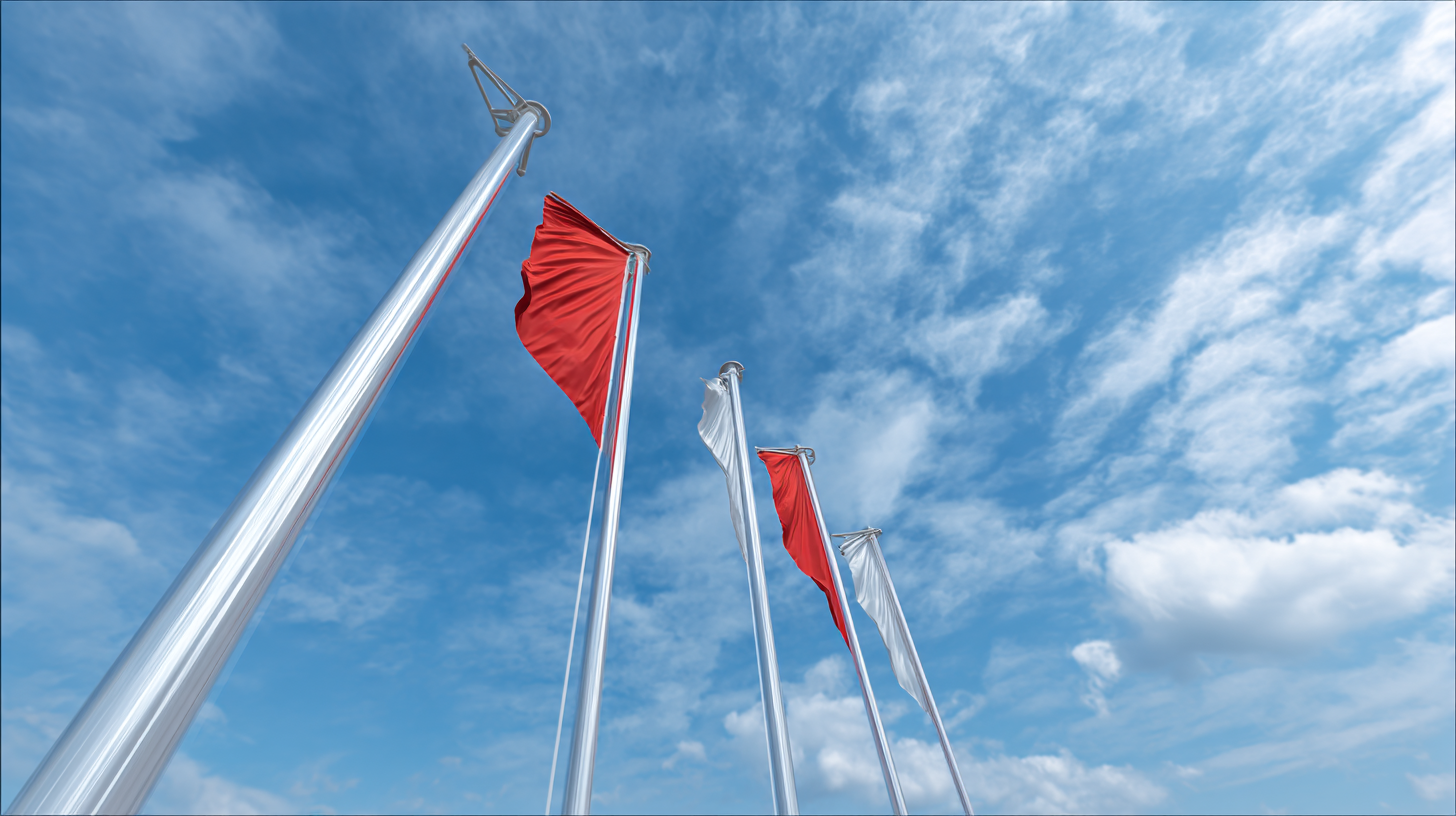
A feather flag pole is a system, not a single tube. The typical set contains multiple pole sections that join with ferrules or sleeve joints, a tensioned banner arm that holds the top edge of the flag taut, a base or ground spike, and a carry bag for transport. The banner itself attaches with a sleeve, ground stake, or a combination of both, depending on the configuration.
Two structural details drive most complaints. The first is joint fit: if sections are loose, the pole whips and the banner never sits flat. The second is base selection, since a pole that is perfectly rigid on a hard surface will still lean in a spike that has been pushed into soft ground. Standard feather pole heights sit in the 10 to 15 ft range, which is a good working band for roadside and storefront visibility.
Material Comparison for Feather Flag Poles
Pole material decides how the display behaves in wind and how long it survives handling. Fiberglass is flexible and light, so it bends and recovers in gusts; aluminum is stiffer and generally the more economical choice; carbon fiber is strong and very light, which suits portable kits where weight matters most. Steel is heavier and reserved for larger fixed installations, and plastic parts belong in light-duty bases rather than load-bearing poles.
| Material | Weight | Flex in wind | Best suited to |
|---|---|---|---|
| Fiberglass | Light | High, recovers well | Coastal and breezy sites, frequent transport |
| Aluminum | Light to medium | Moderate | General promotional use, large volume programmes |
| Carbon fiber | Very light | Moderate, high strength | Premium portable kits and travel events |
| Steel | Heavy | Low | Permanent or heavy-duty installations |
Quality Checks to Specify Before Shipment
Quality control is where an overseas order is won or lost, so put the checks in the purchase order rather than in an email thread.
- Section fit: joints should assemble by hand and hold under load without play.
- Banner arm tension: the arm must hold the top edge flat, with no sag across the width.
- Finish: no burrs, no exposed fibers, and consistent anodised or coated colour.
- Base hardware: spikes and plates straight, weld-free of voids, and matched to the pole diameter.
- Banner print: colour matched to the approved proof, with reinforced corners and clean stitching.
- Packing: sections bundled and labelled, bases packed separately, one carry bag per set.
A supplier who can produce a dimensional report and photo record per batch gives your incoming inspection something to check against, which is worth more than any verbal assurance.
Customization: Print, Hardware, and OEM Programs
Customization runs on two levels. On the banner side, that means size and outline, print sides, colour accuracy, and finishing at the corners and sleeve. On the hardware side, it means pole finish and colour, base type, arm length, and the packaging that the kit ships in.
For distributors, the more valuable layer is OEM and ODM work: your own branding on the carry bag and box, a defined kit bill of materials, and a fixed specification that stays identical on reorder. That is how a feather flag pole manufacturer becomes a supply partner instead of a one-off vendor. Our advertising display products and OEM and ODM programmes are set up exactly for that model, from single banner art to full kit design.
Spare Parts and Life-Cycle Support
Feather poles rarely fail as a whole. A section bends, a spike goes missing, a carry bag wears through, or a banner reaches the end of its print life. The cost of that failure depends entirely on whether replacements can be ordered individually.
Ask for the pole diameter and joint specification in writing so that a later replacement section still fits the frames you already own, and confirm that single sections, bases, arms, and bags can be supplied separately. Buyers who plan for spares typically keep one spare pole set in stock per ten units in service.
Maintenance That Extends Pole Life
- Wipe poles clean after use; grit in the joints is what starts abrasion.
- Inspect sections for cracks or bends after every storm and before each event.
- Store banners rolled, not folded, and keep poles out of direct sun between events.
- Do not over-tension the banner arm; a flat flag does not need to be a rigid one.
- Check base hardware seating whenever the ground surface changes.
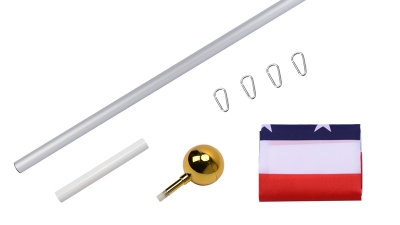
Where the display is intended to stay up permanently rather than travel, move the specification to a fixed in-ground pole. Our outdoor flag pole range covers multi-section aluminum kits from 16 ft through 30 ft, supplied with round or eagle-head finials and a base sleeve for stable ground mounting.
Requesting Samples and Quotations
Start the conversation with a specification, not a general enquiry. Send the pole height, material, banner size, print requirement, base type, target market, and the quantity you plan for the first order and the year.
Our team will recommend the pole and banner configuration that fits the application, confirm the hardware and packaging details, and return a quotation with a sample plan through our contact page. If you are supplying a distributor network, tell us in the same message so we can quote the kit format, spare parts, and private-label packaging together.