Buyers who source wholesale flag poles usually arrive with the same three questions: which material survives the local climate, how many sections the pole should ship in, and how to tell a durable pole from a thin one before the container leaves the factory. This guide answers them in the order a purchasing team actually works.
What to Fix Before You Compare Wholesale Flag Poles
A flagpole is not a single product. It is a system: shaft, base or bracket, truck or round head, halyard, and the clips or rings that carry the fabric. When one part is under-specified, the display fails after installation rather than in the showroom. Treating pole and hardware as one specification is the fastest way to reduce after-sales claims.
Lock four variables before you request quotations: material and finish; overall height and number of sections; installation type (in-ground, wall-mount, roof-mount or portable base); and the flag size the pole must carry. Everything else, including colour, branding and packaging, sits on top of those four. Our outdoor flag pole range is organised around that same structure, so a specification can be matched to a proven model instead of starting from a blank drawing.
Materials That Decide Flag Pole Durability
Durability is a materials question first and a marketing question second. Five material families cover most of the market, and each one fails in a different way.
- Aluminum — light, rust-resistant and inexpensive to freight. It is also the material most often thinned to hit a price point, and a thin aluminum tube dents or bends in strong gusts. Specify alloy and wall thickness rather than the word “aluminum”.
- Fiberglass — does not conduct electricity, does not corrode and holds colour under strong sun. It tolerates wide temperature swings and can be moulded into tapered or decorative profiles, which is why it dominates coastal, campus and resort installations.
- Steel and stainless steel — the stiffest option for long spans and heavy flags. Stainless keeps a clean appearance with little care; painted carbon steel needs an active rust-prevention programme, especially at the base where water collects.
- Wood — traditional appearance for heritage and residential projects, but it requires re-treatment to prevent rot, warping and insect damage. It suits buyers who accept a maintenance commitment.
- PVC and light composites — acceptable for indoor promotion and short campaigns, not for permanent outdoor flagpoles.
Material trade-offs at a glance
| Material | Strength | Watch out for | Typical use |
|---|---|---|---|
| Aluminum | Light, rust-resistant, low freight cost | Bends or dents when wall thickness is reduced | Commercial and residential poles, portable bases |
| Fiberglass | Corrosion-free, non-conductive, colour-stable | Higher unit cost than aluminum | Coastal sites, campus, resorts, decorative profiles |
| Stainless steel | High stiffness, clean surface | Highest material cost | Premium wall-mount and architectural projects |
| Painted steel | Strong at low cost | Rust at chips, joints and the base | Industrial yards with a maintenance plan |
| Wood | Classic look, easy to repair | Rot, warping, insects | Heritage and traditional residential |
Section Design, Height and Wind Load
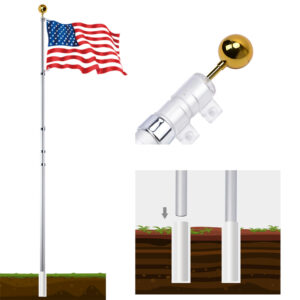
Commercial poles are usually supplied in several sections that splice or telescope together. Multi-section construction keeps freight and storage manageable, lets one damaged section be replaced instead of the whole pole, and allows one product line to cover several working heights.
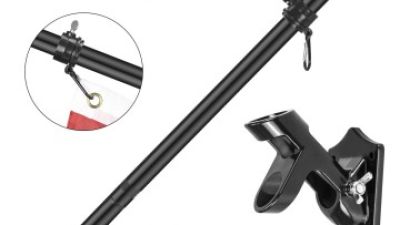
Short wall-mounted poles for domestic use follow the same logic: a splicing shaft with a rotating round head, an aluminum alloy base plate and two hanging flag buckles. The rotating head reduces tangling, and the sectional shaft stores easily when the display comes down for severe weather.
Height has to answer to the site. Trees, roof lines and roadside signage all compete with the flag, and a pole that is too short disappears against them. Taller poles carry more wind load, so they need a deeper footing or guy wires that distribute the load, and they must never be positioned under overhead power lines. Ground conditions matter just as much: soft or unstable soil needs a concrete footing, and the base has to be level and firm to keep the shaft plumb.
ODM or OEM: What You Are Actually Buying
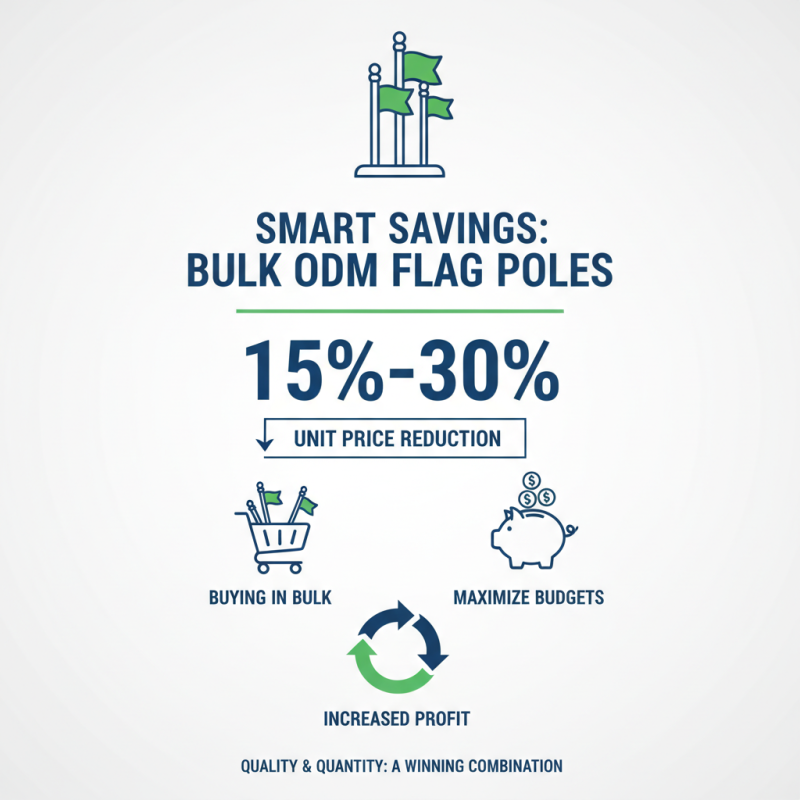
With OEM, you supply the design and the factory manufactures to your drawing. With ODM, you select a design the manufacturer has already engineered, tooled and field-tested, then apply your branding, finish and packing. ODM shortens development time and removes tooling risk; OEM gives you exclusivity over geometry and proportion.
Both routes need the same documents: a dimensioned drawing, a finish specification, a hardware list and a packing standard. Ask for a pre-production sample and for the installation guide that will ship inside the carton. Unclear assembly instructions are one of the most common complaints in flagpole feedback, and a supplier who supplies a clear guide protects your brand as much as their own. Our OEM and ODM service runs both routes from a single specification sheet.
A Durability Checklist for Wholesale Flag Poles
Use this list when you inspect a sample or audit a factory. Every line is a place where a low-cost pole differs from a durable one.
| Check | Why it matters |
|---|---|
| Shaft alloy and wall thickness | Thickness, not the material label, decides whether the pole bends in a gust |
| Finish uniformity | Thin or uneven coating is where chalking, chipping and rust begin |
| Section joint fit | Loose joints rattle and wear; tight joints hold height under load |
| Truck or round head rotation | A head that will not turn freely wraps the halyard and frays flag edges |
| Attachment hardware | Rings and buckles sized to the pole diameter (common ring diameters are 1 inch and 1.26 inches) hold the flag without pinching it |
| Halyard, pulley and cleat | These moving parts wear out long before the shaft does |
| Base plate, bracket or footing design | Most reported pole failures are actually anchorage failures |
| Packing standard | Sleeves, bags and carton design decide how many units arrive display-ready |
Mounting and Accessories That Extend Service Life
Specify the fixing to the substrate, not just the pole. Wall and roof brackets need a substrate that can take the load; portable bases need ballast that matches the expected wind; in-ground installations need a footing sized to the pole height. Buyers who standardise on one bracket family across a project simplify both installation and later replacement.
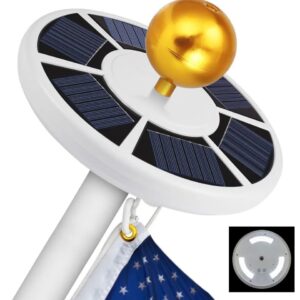
Then look at the consumables: flag rings and clips, a finial or ornament, and lighting for night display. Consumables are what your end users actually touch, so finish, fit and colour consistency here shape how the whole installation is judged. A full selection is listed under flagpole accessories.
Maintenance is short and predictable: inspect the pole after storms, clean the shaft, lubricate moving parts, replace a frayed halyard before it tears a flag, and touch up any finish chip before it becomes corrosion. Ten minutes twice a year is the difference between a pole that serves for one season and one that serves for many.
Questions Buyers Ask About Wholesale Flag Poles
Aluminum or fiberglass for a coastal project?
Fiberglass, unless the specification demands metal. It does not corrode, does not conduct electricity and keeps its colour in salt air and strong UV.
How long should a commercial pole last?
Service life depends far more on anchorage, wind exposure and halyard maintenance than on any brochure figure. Poles that are correctly installed and inspected annually are typically replaced because of hardware wear, not because the shaft has failed.
Can we brand the pole and the flag together?
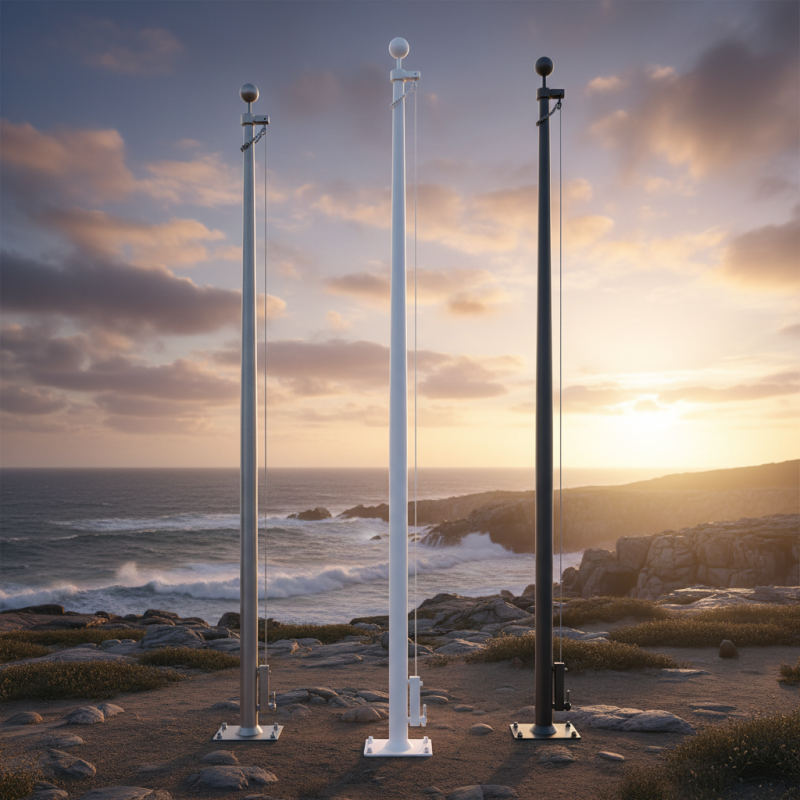
Yes. Poles are commonly finished in black, silver, white and gold, and flags carry printed or embroidered graphics. Keep the pole finish and flag palette in one approval cycle so the delivered system looks deliberate.
What should we compare between suppliers?
Three things: the specification sheet, the physical pre-production sample, and the installation guide. Price is only meaningful once those three are equal. See the wider product catalogue to understand which formats are available for each mounting type.
Send Your Specification, Get a Matched Quote
Send us the four variables that matter: material and finish, height and section configuration, mounting type, and flag size. Include your target market and climate if you already know it, plus any branding requirements. Our engineers reply with a matched model, a hardware list and the installation documentation your customers will receive. Use the quote request form and put the project name in the message field so your file stays together.