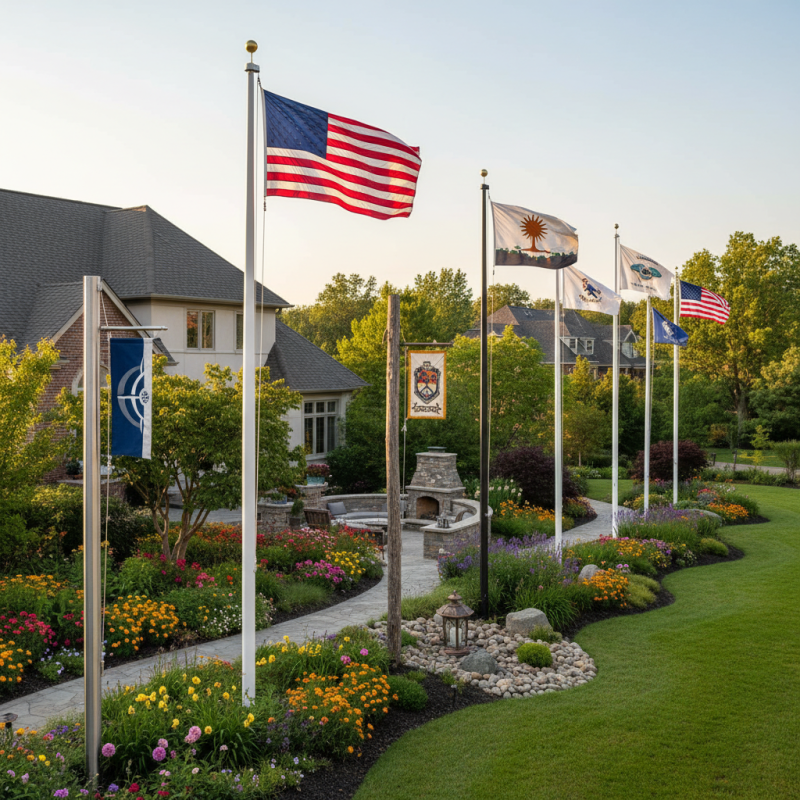
Most disappointing flag poles for garden installations fail for a mundane reason: the pole was chosen before the site was studied. Ground conditions, wind exposure, sightlines from the street and the flag size you actually want to fly decide the specification far more than the finish does.
Read the Site Before You Choose Flag Poles for Garden Spaces
Walk the garden and answer four questions. Where will the flag be seen from, and at what distance? What is the tallest competing object within sight — a tree, a roof line, a hedge? How exposed is the spot to prevailing wind? And what is under the surface where the pole will stand?
Those answers set two numbers: the pole height and the mounting method. A pole that is shorter than the surrounding hedge line effectively disappears, and an exposed site needs either a shorter pole or a stronger anchorage and stabilizing hardware. A soft, recently filled or wet area needs a concrete footing rather than a plate or a stake.
One more constraint applies before anything is ordered. Local rules and homeowners association guidelines often govern pole height, placement and sometimes the flag itself; checking them first is cheaper than moving a footing later.
In-Ground or Telescoping: Two Different Garden Flag Poles
In-ground poles are permanent. They are set into a concrete footing, stand plumb under load and handle the widest range of heights, which makes them the natural choice for a fixed display at the front of a property. The trade-off is commitment: once the footing is poured, the position is fixed.
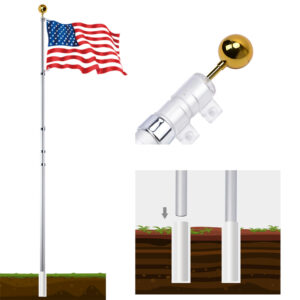
Telescoping poles use stacked sections that extend and retract. They need no permanent foundation, are easy to store and are simple to move for seasonal displays, events or a change of layout. Their limits are height and stiffness: a long telescoping pole on an exposed site needs more care in setup and anchoring than a fixed in-ground pole.
A third option sits between the two. Short sectional poles can be mounted on a wall or a low base with a splicing shaft and a rotating round head, with an alloy base plate carrying the load. The rotating head lets the flag swing freely and reduces tangling, and the sectional shaft is easy to take down and store when severe weather is forecast.
Aluminum or Fiberglass: Durability and Upkeep
Both materials suit domestic gardens, and the difference shows up in how they age.
- Aluminum — light enough to install without heavy equipment and naturally rust-resistant. It is the easier material to handle and the cheaper one to buy, but a thin wall will dent or bend in a gust, so specify a heavier wall for exposed gardens and for poles that carry a large flag.
- Fiberglass — does not corrode, does not conduct electricity and does not fade the way painted finishes can. It tolerates wide temperature swings, which matters in gardens that see hard frost and hot summers, and it can be moulded into tapered or decorative profiles. It costs more and is less commonly stocked locally.
- Steel — strongest option, and the one that demands the most attention. Painted steel needs regular rust checks at the base and at any chip.
- Wood — warm, traditional appearance, but it needs re-treatment against rot, warping and insects.
Height, Proportion and Flag Size
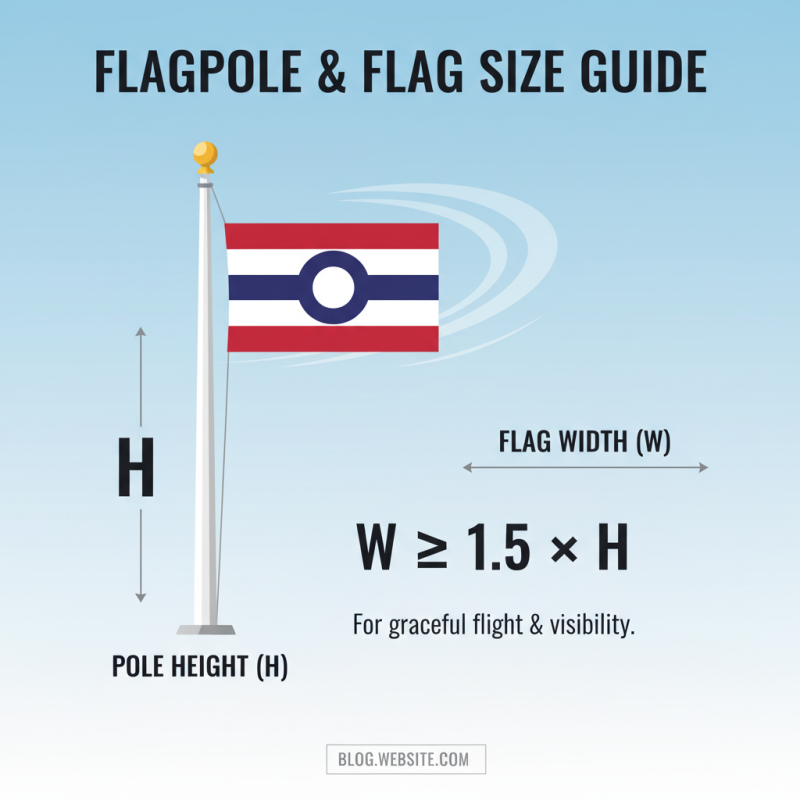
Height should be judged against the flag, not on its own. A flag that is too large for its pole looks heavy and wears faster because it cannot stream cleanly; too small and it reads as a detail rather than a display. A working rule of thumb used across the industry is to size the flag so that its width is roughly one and a half times the pole height in feet, then adjust to the sightline. A taller pole needs a proportionally larger flag simply to remain visible from the road.
Also plan the access route: a halyard with a proper cleat, or a sectional pole short enough to lower by hand, keeps the display in use through the season.
Installation That Keeps the Pole Plumb
Installation quality decides whether the pole looks right in ten years.
- Choose a position clear of overhead power lines and other obstructions.
- Set the pole on level, firm ground. In soft or unstable soil, use a concrete footing sized to the pole height.
- Dig a hole deep enough to give real bearing — a minimum of about three feet is a normal starting point for a ground-mounted garden pole.
- Keep the shaft plumb while the footing cures; a pole that starts off-vertical never rectifies itself.
- For taller or exposed installations, add guy wires or an equivalent bracing method to distribute wind load.
- Follow the manufacturer’s assembly sequence rather than improvising it.
A Maintenance Routine for Outdoor Flag Poles
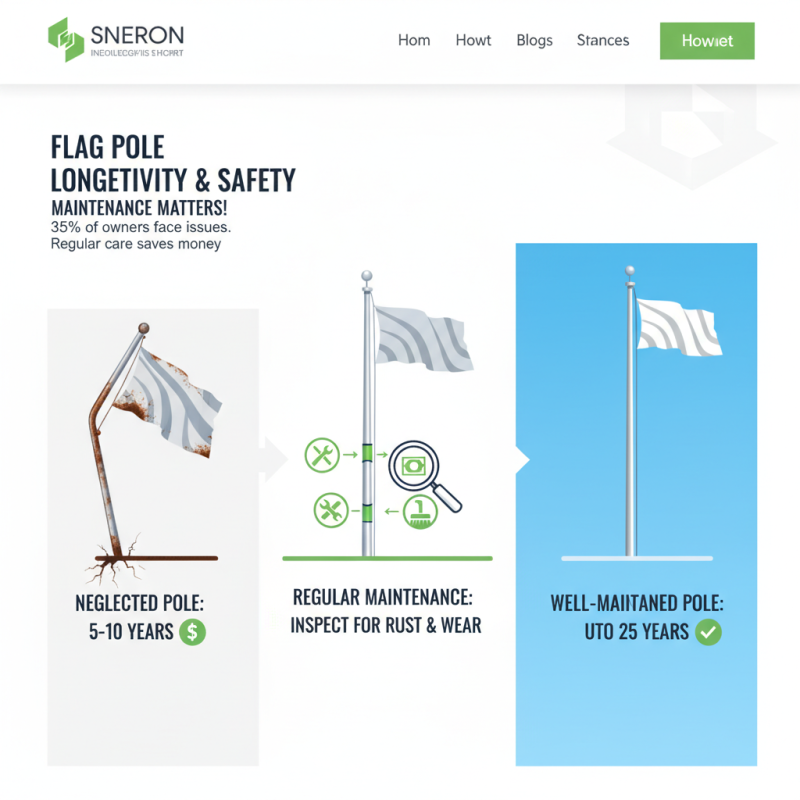
Maintenance on a garden flagpole is short and seasonal. Clean the shaft at least twice a year with mild detergent and water to remove dirt and airborne contaminants, and rinse thoroughly. Lubricate the moving parts — the pulley, the cleat and any rotating head — so they operate without friction. Inspect after storms: check the halyard for fraying, the hardware for slack, the base for movement, and the finish for chips that could begin to corrode.
The flag itself takes more wear than the pole. Polyester resists fading and tearing and suits year-round outdoor display; cotton is more vivid but fades and deteriorates faster in sun and rain. Rotate two flags if the display runs continuously, and take the flag down before severe weather rather than replacing it afterwards.
Accessories That Improve a Garden Display
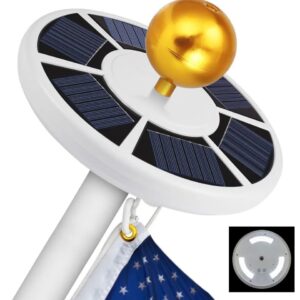
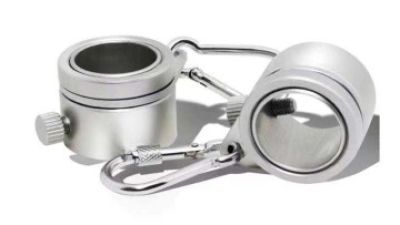
Rings and clips are the parts that connect the flag to the pole, and they decide how evenly it hangs. Matching rings to the pole diameter matters: common ring diameters are 1 inch and 1.26 inches, supplied in sets of two and finished in colours such as white and black so the hardware disappears against the pole. A finial or ornament finishes the top of the pole and is worth choosing in a material that will not corrode. A pole light extends the display into the evening, and packaging should protect the finish where goods are stored in a shed or shipped to a customer. See the full flagpole accessories selection for compatible parts.
Garden Flag Pole Selection at a Glance
| Requirement | Suggested specification | Reason |
|---|---|---|
| Permanent front-garden display | In-ground aluminum or fiberglass pole with concrete footing | Stability and visibility from the street |
| Seasonal or movable display | Telescoping sectional pole on a portable base | No foundation, easy storage |
| Small patio or low wall | Short wall-mounted sectional pole with alloy base plate and rotating head | Fits limited space, stores flat, reduces tangling |
| Coastal or highly exposed site | Fiberglass shaft with heavier anchoring | Corrosion-free and tolerant of salt air and wind |
| Heritage or traditional planting scheme | Wood pole with a planned re-treatment cycle | Matches the landscape, accepts higher upkeep |
Frequently Asked Questions
What height suits a garden flag pole?
Match the pole to the sightline. In an open garden, a shorter pole with a proportionally sized flag reads better than a tall pole with a small flag. Where a hedge or roof line competes for attention, go higher and accept the extra anchoring work.
Is a telescoping pole strong enough outdoors?
Yes, if it is anchored and sized correctly, though it should be lowered in severe weather.
How often should a garden flagpole be cleaned?
Twice a year, plus an inspection after any storm.
Can the pole match the house exterior?
Poles are commonly finished in black, silver, white and gold, which covers most façade palettes. Choose the finish at the same time as the flag so the two are approved together. The outdoor flag pole range shows the available combinations, and completed installations are collected in the project gallery.
Plan the Display, Then Order the Pole
Send us the site details that matter: available height, ground type, wind exposure, how visible the position is from the street, and the flag size you intend to fly. Add any homeowners association constraints you already know about. We will match a pole, mounting method and accessory set to that brief and reply with the specification before you commit. Use the quote request form to start; if you are comparing formats first, the product catalogue shows what is available by mounting type.