Boat Flags by Watercraft Type
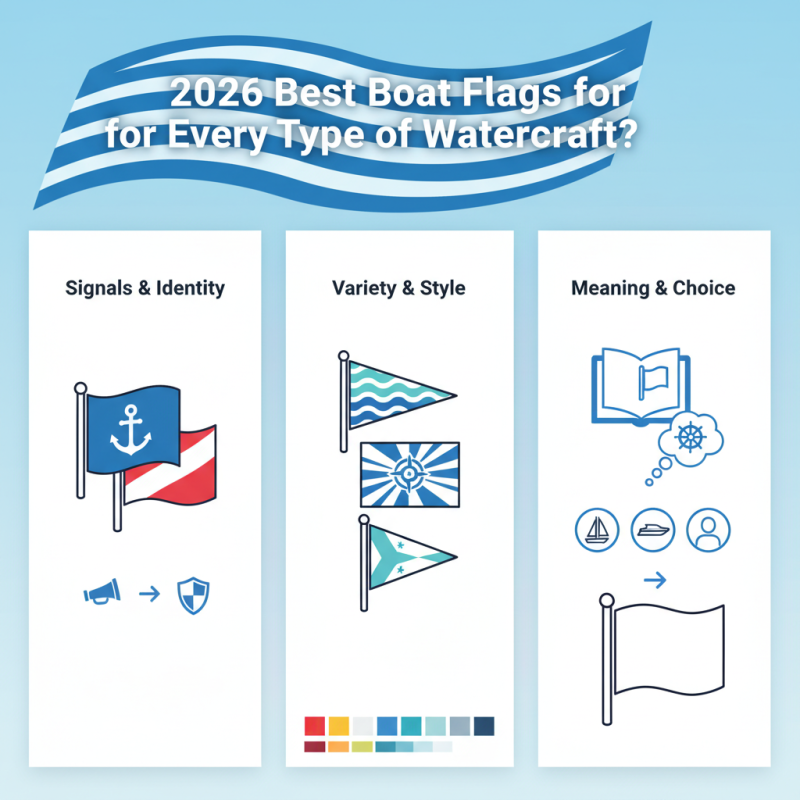
Boat flags do two jobs at once. They identify the vessel and the people aboard, and they communicate status to everyone else on the water. A flag that suits a 40 ft cruiser is usually the wrong choice for a dinghy, and a safety signal is a different product from a decorative ensign.
This guide maps boat flags to the watercraft they are normally bought for, then walks through the fabric, size, and mounting decisions that follow from that choice. The logic is deliberately simple: pick the vessel type, then the flag’s function, then the hardware. Buyers specifying flags for a marina, a charter fleet, or a dealer program can use the same sequence when they build a consolidated purchase list.
Which Flag Belongs on Which Watercraft
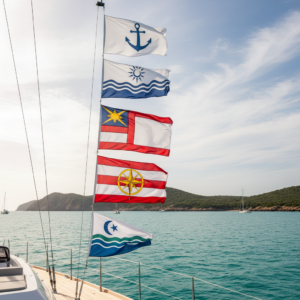
Most flag programmes on recreational and light commercial vessels come down to four categories: identification flags (national ensign, club burgee), signalling flags from the International Code of Signals, courtesy flags flown when visiting another country’s waters, and safety or activity flags such as the diver-down flag. The vessel type determines which of these are flown routinely and how much wind exposure the flag will take.
| Watercraft | Flags normally flown | Typical size | Mounting point |
|---|---|---|---|
| Sailboat and dinghy | Ensign, class or regatta flag | 12 x 18 in to 2 x 3 ft | Masthead or backstay staff |
| Motorboat and cruiser | Ensign, burgee, courtesy flag | 3 x 5 ft typical | Stern staff or arch-mounted holder |
| Yacht and larger cruiser | Ensign, courtesy flag, signal set | 24 x 36 in and above | Highest practical point aft |
| Fishing boat | Registration and activity signals | 2 x 3 ft | Superstructure or radar mast staff |
| Tender and paddlecraft | Compact identification flag | 12 x 18 in | Short staff or deck holder |
| Any vessel with divers down | Diver-down flag | 2 x 2 ft | Highest point, unobstructed sightline |
The pattern is consistent: the smaller and more exposed the vessel, the smaller and lighter the flag, because a flag that is too large for its staff whips itself apart and disturbs the boat’s handling.
Matching Fabric to Your Sailing Environment
Fabric choice is where most flag purchases succeed or fail. Polyester is the default for daily display because it balances durability against weight and holds up to sun and saltwater. Nylon is lighter and dries quickly, which suits signal flags and light-air sailing grounds. Canvas is thicker and stronger and is chosen for larger vessels where abrasion matters more than weight, though it is heavier and slower to dry. Rigid panels and vinyl are used where the flag has to stay legible and flat, such as diver-down flags.
| Fabric | Weight | Drying | Best used for |
|---|---|---|---|
| Polyester | Medium | Moderate | Ensigns and courtesy flags in daily service |
| Nylon | Light | Fast | Signal flags, trailer boats, inland waters |
| Canvas | Heavy | Slow | Larger vessels and ceremonial display |
| Vinyl or rigid panel | Heavy | Immediate | Diver-down and other safety signals |
Salt, UV radiation, and constant flapping are the three failure modes. Whichever fabric you select, specify reinforced fly ends and corners, double-stitched hems, and a marine-grade print or dyed fabric so the design does not walk out of the cloth after one season.
Sizing Boat Flags to Vessel and Sightline
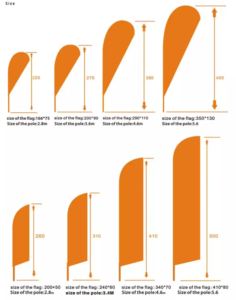
Size follows sightline. A flag has to be readable from the distance at which another skipper needs the information, and on a small boat that distance is short. Working sizes from the vessels above are a practical starting point: 12 x 18 in for dinghies and tenders, 2 x 3 ft for signal work, 3 x 5 ft as the common recreational standard, and 4 x 6 ft where a racing or event flag must read from the shore.
Two rules keep a flag flying well. First, keep the flag’s hoist in proportion to the staff or halyard it hangs from; an oversized flag on a light staff is the single most common cause of hardware damage. Second, mount high and clear, so the flag catches clean air instead of the shadow of the superstructure.
Mounting Hardware: Clips, Sleeves, and Hoists
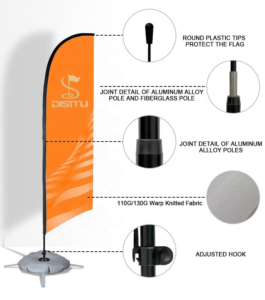
Flag performance is a hardware question as much as a fabric question. Grommets suit a halyard with flag clips; a sewn sleeve suits a staff, a boat flag holder, or a fixed pole; and a halyard with a swivel clip lets the flag rotate clear instead of wrapping. For flags that will be taken down often, clips and quick-release fittings save time and reduce wear at the hoist edge.
Stainless hardware is the practical choice on saltwater, and any moving part should be inspected for binding. If you are ordering flags together with poles, holders, or wall and deck mounts, our flagpole accessories range covers the fittings that keep the display secure in a seaway.
Signal Flags, Ensigns, and Courtesy Flags
Signalling flags are governed by the International Code of Signals, and each letter carries a specific meaning; the ‘A’ flag, for example, indicates diving operations in progress. Ensigns identify the vessel’s country of registration. Courtesy flags are flown when entering the waters of another state and are usually smaller than the ensign. Some regions additionally require a yellow quarantine flag during health or customs clearance, so a vessel cruising foreign waters should carry an ensign, a courtesy flag, and a basic signal set.
Because these flags are read rather than admired, keep their proportions and colours correct. A courtesy flag in the wrong ratio reads as an error, not a style choice.
Custom Boat Flags: Artwork and Finishing
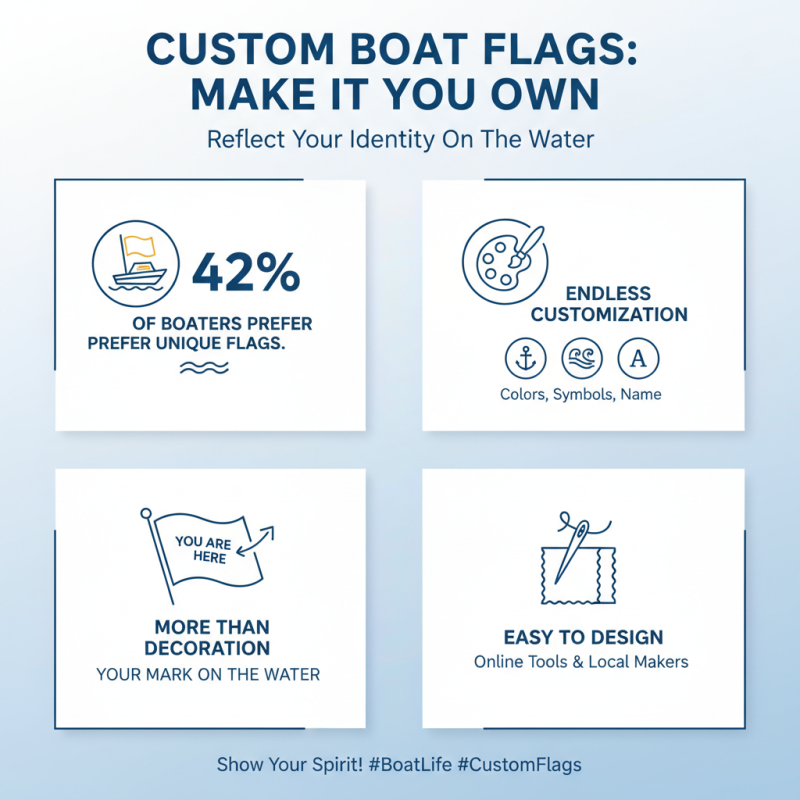
Club flags, sponsor flags, and owner’s flags are usually built to a specific printed design. The usable design brief is short: provide vector artwork, state the finished size and orientation, specify single or double-sided print, and confirm how the flag will be attached. Double-sided printing gives a readable image on both faces, while a mirror-through single print is lighter and less expensive.
Keep the layout simple. Contrast carries at distance, and a crowded design loses impact against moving water. Our flag and banner production covers custom shapes, reinforced corners, and optional pole sleeves, and the same line supports club and corporate programmes with consistent colour between repeat orders.
Care, Storage, and Inspection
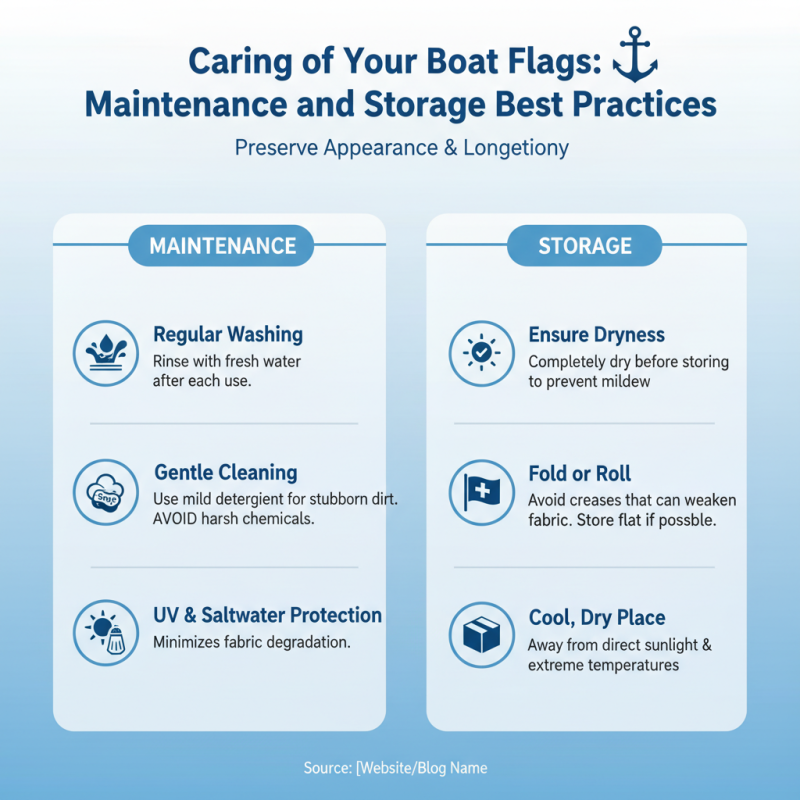
- Rinse with fresh water after saltwater exposure; use mild detergent only, never harsh chemicals.
- Dry thoroughly before storage, and roll rather than fold to avoid permanent creases.
- Store the off-season set in a cool, dry place away from direct sunlight.
- Inspect hoist edges, fly ends, and stitching for fraying before every long passage.
- Replace a flag as soon as its colours fade or its edge frays; a tired flag is a weak signal.
These steps do not require special equipment, and they are the difference between a flag set that lasts several seasons and one that is replaced every year.
Building a Fleet Order
For a marina, charter operator, or dealer, the efficient approach is to standardise: one fabric family, two or three sizes, and a common attachment method across the fleet. That keeps spares interchangeable and lets you order in volume without holding a catalogue of one-off specifications.
Send us your vessel list with the flag type, finished size, and quantity for each line, plus the artwork for any custom design. Our team will come back with a specification sheet, fabric recommendation, and a quote through OEM and ODM production, and we can supply the matching staffs, holders, and outdoor flag poles in the same shipment so nothing arrives as an afterthought.